Homemade gingerbread spice blend is swirled into a rich custard, then baked until decadently creamy. A thin-as-ice crunchy sugar crust, caramelized to perfection, gives each gingerbread crème brûlée a sparkling finish!
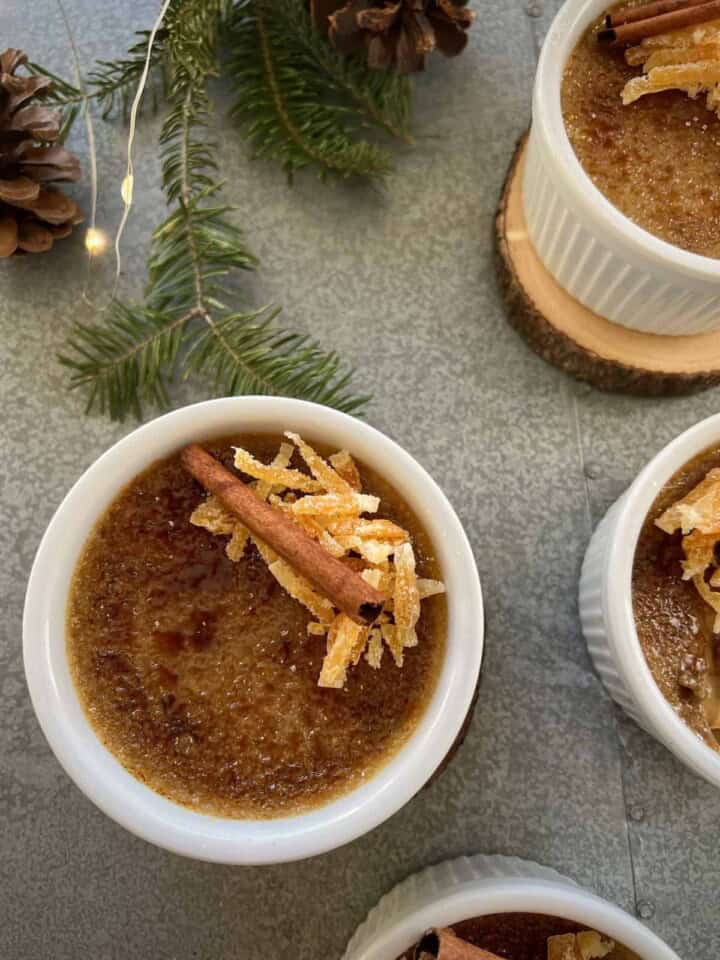
I'm not always a sweets person, but I do seem to have a second stomach when it comes to crème brûlée. No matter how big the meal has been, if there's crème brûlée on the menu, it's a need.
So making gingerbread crème brûlée--being the beautiful union of my favorite cookie and my favorite dessert that it is--seemed like an excellent way to spend a December day as we celebrate Yule.
It starts with a base of heavy cream for classic richness, to which you'll add an easy homemade gingerbread spice mixture. Inspired by trying Lebkuchen (a hearty, German-style gingerbread) for the first time last season, I add a few cracks of black pepper and fresh orange zest to my gingerbread crème brûlée recipe, bringing a zingy brightness and subtle heat that echoes those traditional lebkuchen vibes.
This dessert embodies the contrast between creamy and crunchy, coldness and warmth, traditional and modern. In other words: a delicious dichotomy. And as we observe the darkest day of the year and the return of the light, I can think of no better way to celebrate the beauty of opposing forces and honor the wonder that lies in the in-between.
Happy Yule! 🌲🪵✨
ingredients for gingerbread crème brûlée

ingredient notes & swaps
- Using just egg yolks to make your gingerbread custard base is what gives your finished crème brûlées their ultra creamy, silken texture. Egg whites can become rubbery when cooked; egg yolk on the other hand are rich and smooth when cooked.
- Adding molasses is part of what makes gingerbread taste like gingerbread! The spice mixture does part of the job, yes, but the deeply caramelized, smoky flavor of molasses is what brings depth and heart to your gingerbread. Dark molasses works best for this recipe; avoid blackstrap molasses here as it will be too bitter!
- You'll notice there are no garnishes pictured here, that's because there are so many to choose from! I went with a simple combo of dried citrus (specifically Trader Joe's Dried Mandarins, thinly sliced and tossed with a little sugar!) and a cinnamon stick. Other excellent options: a dollop with whipped cream and crumbled ginger cookies, a spot of cranberry sauce, or festively colored fresh fruit like deep red cherries or jewel-like fresh currants. Think of garnishes as an opportunity to a) highlight what's already in the dish (orange zest and cinnamon), b) provide a complimentary ingredient, color, or aroma, or c) stealthily hide any imperfections like patches over-caramelized sugar. Love a functional garnish!

gingerbread crème brûlée
A homemade gingerbread spice blend is swirled into a rich custard, then baked until decadently creamy. A thin-as-ice crunchy sugar crust, caramelized to perfection, gives each gingerbread crème brûlée a sparkling finish!
- Total Time: 4 hours 55 minutes
- Yield: 4-6 servings 1x
Ingredients
For the gingerbread custard mixture:
- 2 cups heavy cream
- 5 egg yolks, at room temperature
- ¼ cup granulated sugar
- 2 tablespoons molasses
- 1 teaspoon vanilla extract
- ½ teaspoon orange zest
- Pinch (⅛ teaspoon) salt
- 1 teaspoon ground ginger
- 1 teaspoon ground cinnamon
- ½ teaspoon ground nutmeg
- ½ teaspoon ground cloves
- Pinch (⅛ teaspoon) cracked black pepper
For brûléeing and finishing:
- 1 tablespoon granulated sugar per ramekin
- Toppings such as:
- Chopped dried mandarins
- Cinnamon sticks for topping
- Candied orange peel
- Pomegranate arils
- Powdered sugar
- Whipped cream
Instructions
- Preheat your oven to 300℉. Arrange your ramekins in a baking dish or metal pan and bring a kettle or pot of water to a boil, then cover and turn off the heat.

- Pour the heavy cream into a small saucepan set over medium heat. Let it heat up slowly, stirring often, until it steams gently but consistently. The temperature should be about 145℉ when tested with an instant read thermometer.
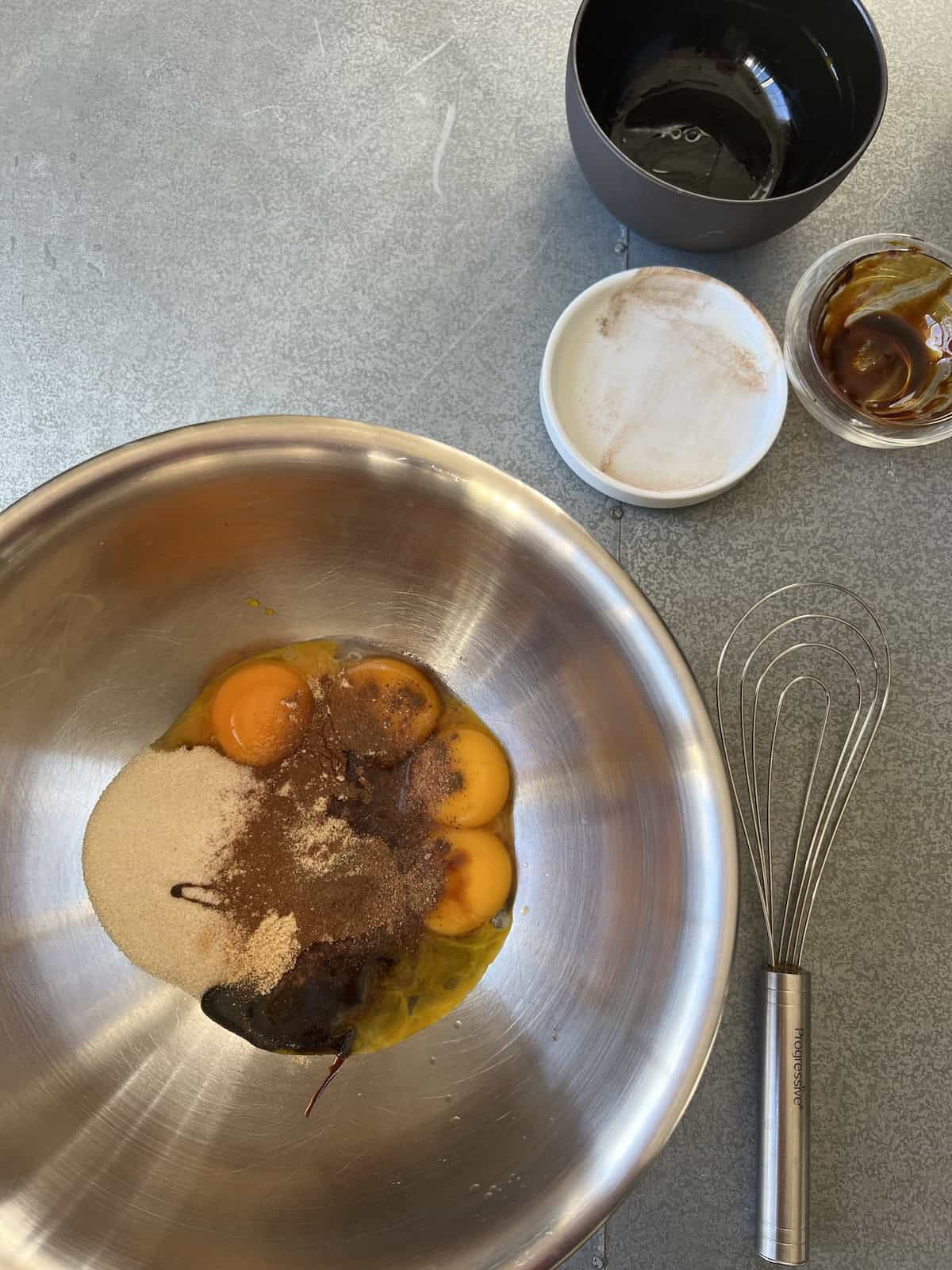
- Combine the egg yolks in a large mixing bowl with ¼ cup granulated sugar, molasses, vanilla, salt, and spices.
- Whisk until smooth and combined. The mixture will be very glossy and rich brown, like melted milk chocolate.
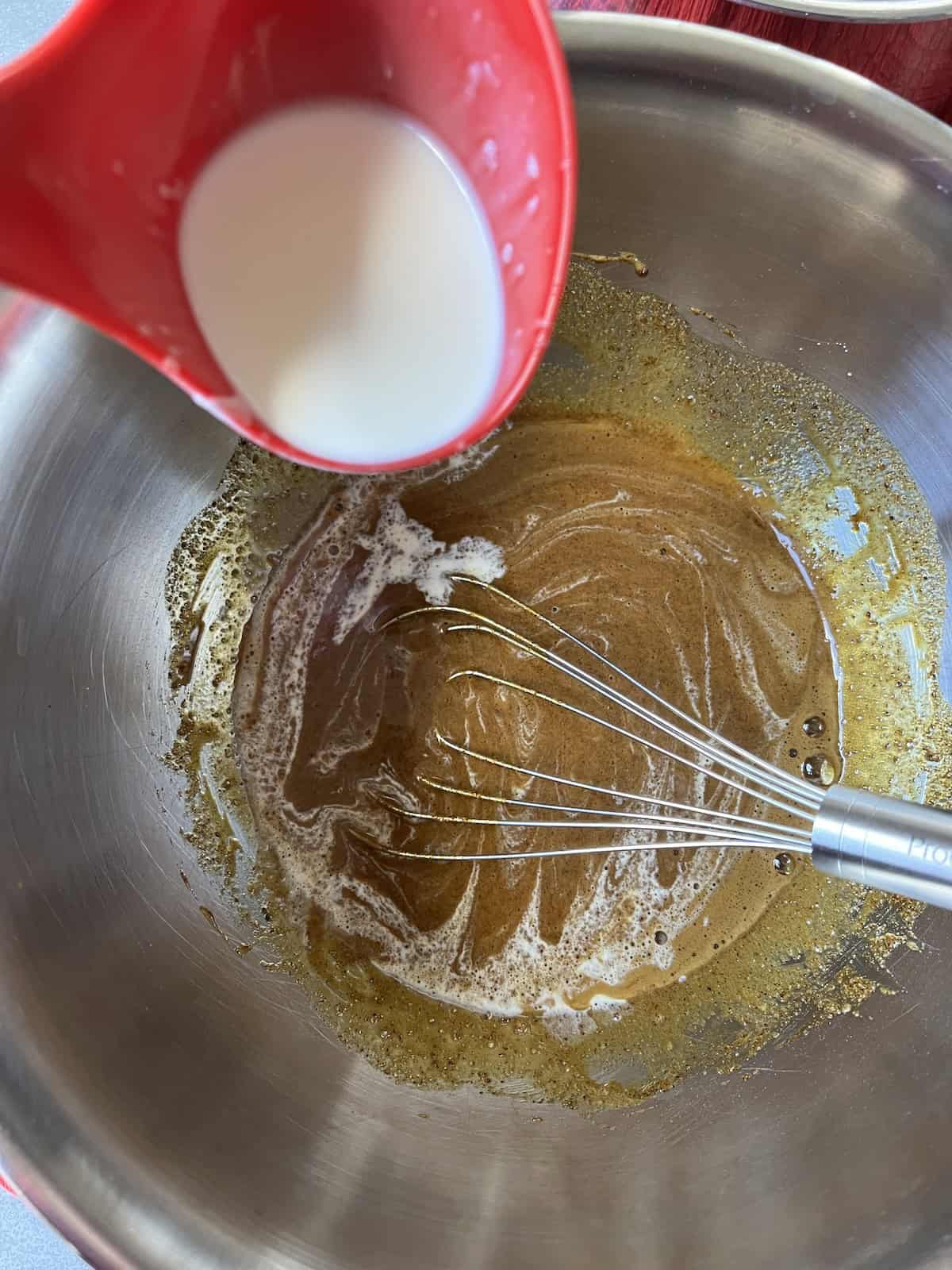
- Use a ladle to slowly dribble a bit of the warm heavy cream into the egg mixture, whisking constantly as you do. Once that ladleful is incorporated, repeat with another ladleful of cream, slowly whisking the entire time. Place your palm against the underside of the bowl; if it's warm to the touch, your egg yolk mixture is successfully tempered!
- Grab the saucepan full of remaining heavy cream and pour it in - still slowly and while whisking constantly, but you don't need to be as delicate with it now that you are past the risky point where the eggs could curdle. Once the hot cream mixes into the spiced egg yolk mixture, you'll notice it starts to smell very gingerbready as the warmth wakes up all of those amazing aromas!
- Stir in the orange zest and finish, appreciating the aromatic brightness that blooms all around you. Incorporating the zest now instead of earlier in Step 2 with the spice mixture is important. Though less acidic than its juice, the zest of an orange could still cause some curdling, which we can prevent by waiting until the end when the egg yolks and dairy ingredients are already stabilized.
- Pour the custard mixture into the ramekins that are lined up in your baking dish. If your custards have a lot of froth or bubbles on the surface, make a quick pass over the top of each with your kitchen torch a) because it's the fastest way to de-bubble them and b) because it's oddly satisfying.
- Pour your boiled water (make sure it is still hot and steamy!) into the baking dish around the ramekins, taking care not to slosh water into the custards themselves. You'll want the water to come about halfway up the sides of the ramekins as this is what helps your crème brûlées create their uniformly silky texture.
- Give each crème brûlée one final stir to redistribute the spices, then transfer them to the oven and bake for 30-40 minutes, depending on the depth of your ramekins and how full they are. You'll know they're done when you see the edges of the custards are set but they still have some wobble in the center.
- Use pot holders, heat proof gloves, or grippy tongs to carefully remove the crème brûlées from the water bath and arrange them on a clean towel. Let them sit for about 15 minutes, then place them, uncovered, in the refrigerator for about 30 minutes. After 30 minutes, cover each ramekin with plastic wrap and refrigerate for at least 3 ½ more more hours or ideally overnight.
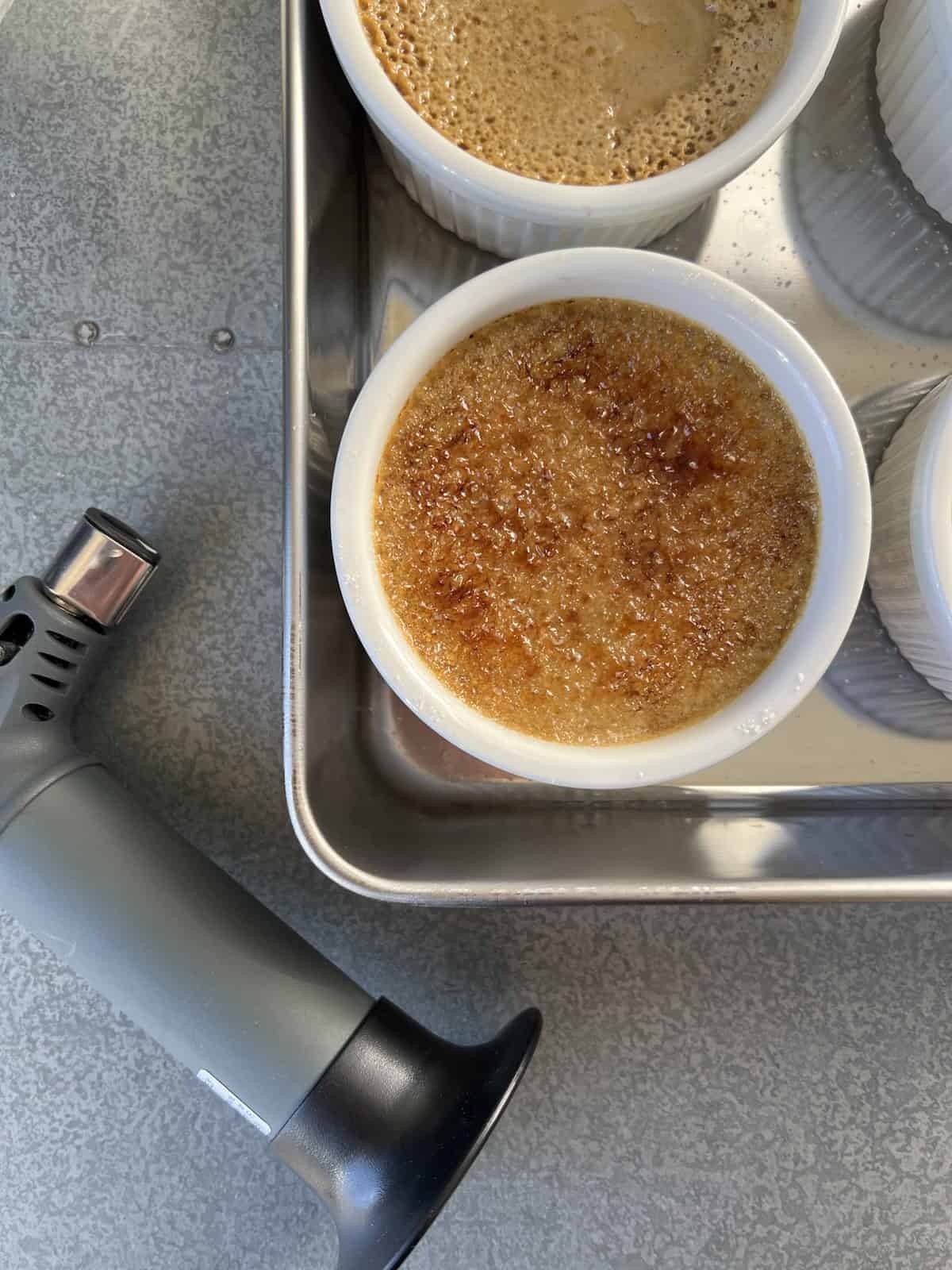
- When you're ready to serve your gingerbread crème brûlée, remove them from the fridge and get your granulated sugar and kitchen torch ready. As you can see the surfaces of the custards may be pockmarked or (ahem, may have gotten stuck to the plastic wrap and torn) but that's okay because the brûléed sugar crust you're about to make will hide everything!
- Sprinkle about 1 tablespoon of granulated sugar in a thin, even layer over the top of each gingerbread custard, shaking it around as needed to distribute it evenly.
- Use the kitchen torch to melt and caramelize the sugar, working towards an evenly golden brown crust across the surface of each crème brûlée. As soon as you see any particular spot turn golden, remove the flame immediately as the sugar will continue to darken in the few seconds it takes to cool off. Slow and steady is key here, just keep passing the torch over the sugar and you'll have perfectly caramelized sugar in no time!
- Let the sugar cool and harden for a minute or two before applying toppings, then garnish as desired and enjoy!






Notes
- Line the bottom of your baking dish with a small kitchen towel or rag (that you don't mind thoroughly soaking and heating!) will give your ramekins something to rest on so that they don't slide around. A silpat would work great too.
- Once filled, don't let the ramekins sit for too long before transferring them to the oven because the gingerbread spices will have a tendency to sink to the bottom.
- Prep Time: 15 minutes
- Chilling Time: 4 hours
- Cook Time: 40 minutes
- Category: Desserts
- Method: Baking
- Cuisine: French
Nutrition
- Serving Size: 1 creme brulee
- Calories: 409
- Sugar: 35 g
- Sodium: 104.3 mg
- Fat: 27.5 g
- Carbohydrates: 36.8 g
- Fiber: 0.6 g
- Protein: 5.2 g
- Cholesterol: 298.4 mg
FAQs
What exactly is crème brûlée?
Crème brûlée is a French dessert composed of 2 key components. First, a water bath baked custard with a thick, pudding-like texture. Second, a caramelized sugar crust that is torched immediately before served, until melted and golden brown. In other words, the stuff of dreams!
Is crème brûlée gluten free?
Yes! As written, this recipe for gingerbread crème brûlée-and most crème brûlées I know of-are gluten free. Rather than being thickened by flour as some desserts are, crème brûlée gets its thickness from egg yolks. There is always a chance that someone uses other gluten-containing ingredients in their crème brûlée though, so check ingredients lists and product labels carefully. There could be hidden sources of gluten or cross-contamination issues, especially when it comes to soy or oat based ingredients and additives like sprinkles and decorations.

If you are a fellow fiery ginger fiend, you'll like these other ginger-centric recipes like my No-Bake Key Lime Cheesecake made with a ginger cookie crust, or this Acorn Squash Bread loaded with fresh ginger and warm spices!
dig in!
Enjoy & let me know what you think 🌙 💛